
 By Breaking Editor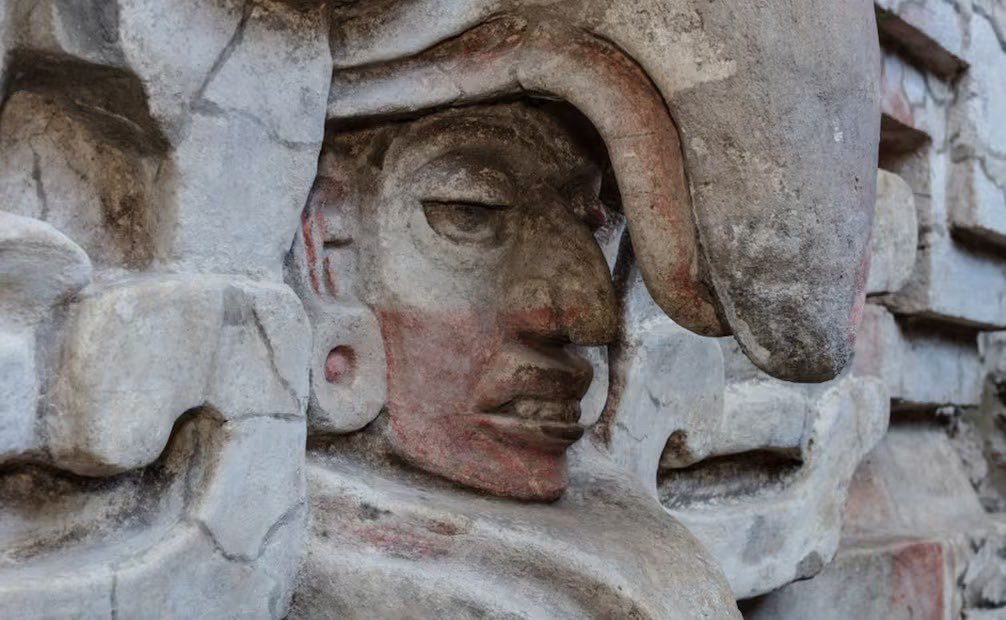
The Mexican government recently announced the discovery of a tomb in Oaxaca, Mexico.
In conjunction with the INAH, President Sheinbaum announced late in 2025 the well-preserved Zapotec tomb, dating back to AD 600, located in the Central Valleys of Oaxaca. This find is being hailed by historians and archaeologists as one of the most significant archaeological discoveries in the last decade, potentially transforming our understanding of Zapotec civilization.
The Instituto Nacional de Antropología e Historia (INAH) revealed that the tomb includes sculptural elements and mural paintings, which provide insights into the social organization, funerary rituals, and cosmovision of this ancient civilization.
Essentially, this discovery redefines our current knowledge about one of the most sophisticated Mesoamerican civilizations.
During the presser, President Claudia Sheinbaum touted the discovery as a proud reflection of Mexico’s rich cultural roots. “This encapsulates the grandeur of the millenary Zapotec culture,” Sheinbaum noted in her comments about the discovery.
Expeditions led by INAH have uncovered significant artifacts and murals within the burial site that include original pigmentation in hues of blue, green, and ochre.
As experts continue to analyze the find, it is clear that this discovery not only sheds light on the Zapotec civilization but also enhances the cultural narrative of Mexico. Mexico’s is on par – in some senses much more expansive- with Egypt in terms of the sheer scale and cultural splendor available in it’s archeological sites. Food, speech and other artifacts of the time still remain with us today, and the discovery of tomb will exemplify new clues as to what life was like in the advanced Zapoteca communities of that day.