
 By Breaking Editor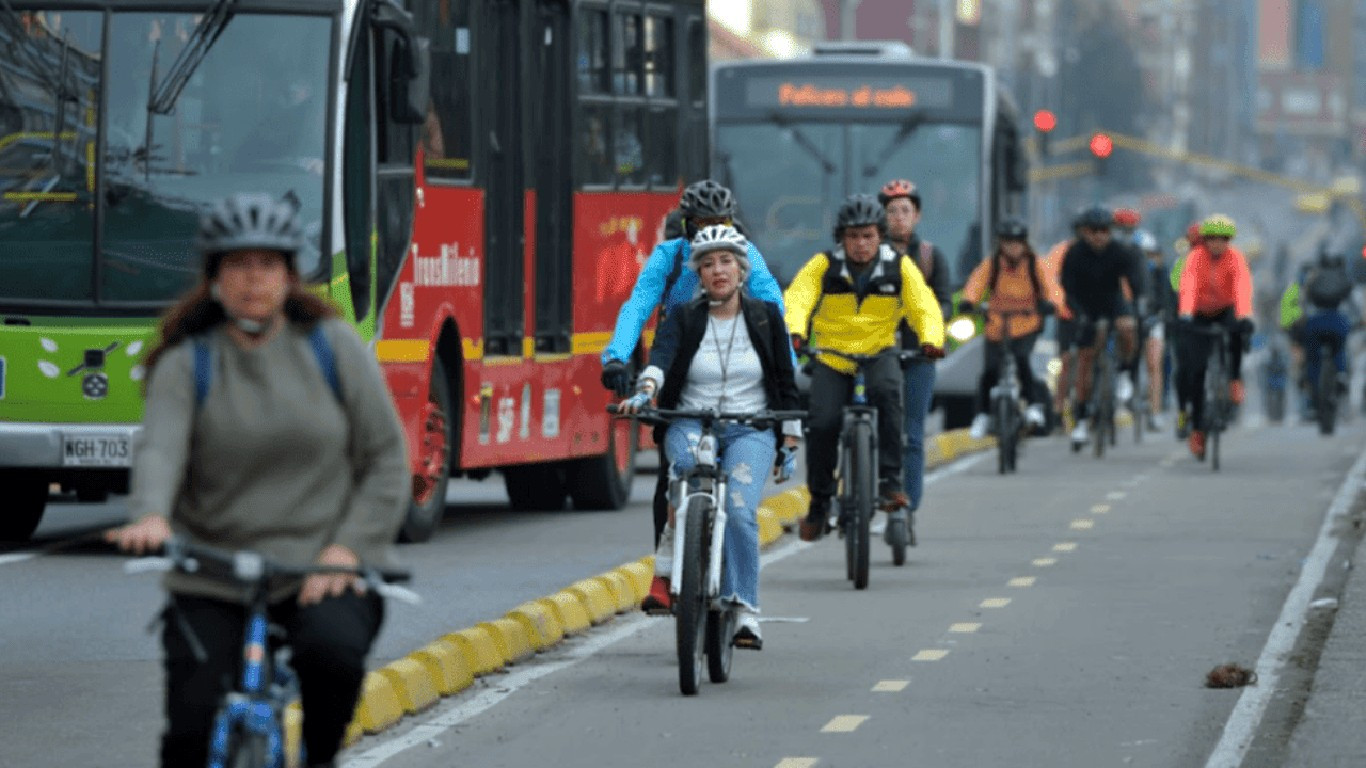
An annual initiative to highlight the need to reduce car dependency, ‘Day without cars’ took place in Bogota, Colombia this week.
On February 6, 2025, Bogotá implemented its annual “Día Sin Carro,” a day intended to reduce vehicular pollution and promote alternative modes of transportation. However, as with previous iterations of the event, the effectiveness of this initiative has drawn scrutiny.
This year’s event was marred by bad luck, with some residents reporting significant issues, including adverse weather conditions. Local journalist David Curtidor noted on social media, “En Bogotá fue día sin carro y sin motos, pero resultó sin ciclistas, tan mala fue la planeación, que lo hicieron en día de lluvia” (In Bogotá, it was a day without cars and motorcycles, but it resulted in a lack of cyclists; the planning was so poor that they scheduled it on a rainy day).
However, one could not anticipate sudden changes in Bogota’s Londonesque weather and we could not fault local city planners for that.
Despite the day’s intentions, real-time air quality monitoring indicated minimal effects on pollution levels. Hernández reported at noon that the air quality remained at “moderate” levels, significantly questioning the initiative’s ability to achieve its environmental objectives. He stated, “El día sin carro no tuvo mayor efecto en la calidad del aire” (The day without cars had little effect on air quality).
Citizens also expressed frustration over the inconvenience posed by the restrictions. A user reflected on experiences with medical appointments on the day, saying, “Mañana es el día silencioso en Bogotá” (Tomorrow is the silent day in Bogotá) while noting the difficulty of navigating the city’s transportation challenges.
The Bogotá authorities facilitated operations for public transport during the closure, with TransMilenio (the city’s bus rapid transit system) stating they operated at full capacity. However, mixed reactions continue to surface about the event’s overall impact, with critics asserting that it serves more as a platform for political visibility than a viable solution for sustainable urban transport. One user succinctly summarized their skepticism by questioning the event’s utility: “¿Para qué sirve?” (What is it for?), which underscores the need for broad communication on the topic of pollution and fossil fuel consumption.
As the city of Bogota evaluates the outcomes for this year’s event, “Día Sin Carro”splits the population in terms of opinion. For some, like the authors of this post, it does resonate. However, others find it a nuisance where they cannot easily reach their destination and have to rely on TransMilenio, a notoriously unsafe mode of transportation in some stops.