
 By Breaking Editor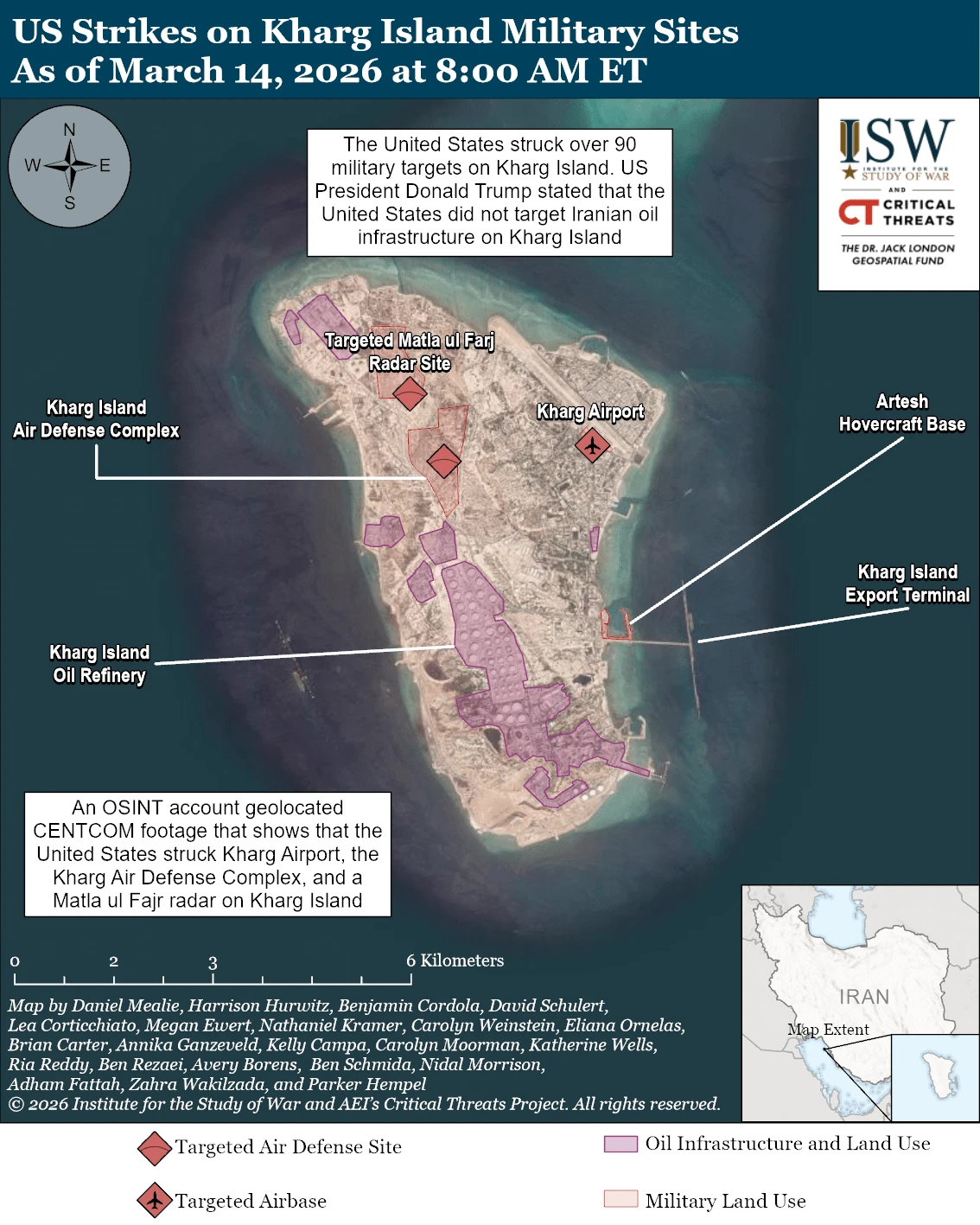
In a significant escalation of military tensions in the Persian Gulf, U.S. forces conducted extensive strikes on Iran’s strategic Kharg Island, vital for the country’s oil exports. The operation, which reportedly destroyed over 90 military targets including missile and naval mine storage facilities, has drawn sharp warnings from Iranian officials about potential retaliation against U.S. interests in the region.
U.S. Central Command (CENTCOM) confirmed the offensive, aimed at neutralizing Iran’s military capabilities without targeting its critical oil infrastructure, which is crucial for the export of approximately 90% of Iran’s crude oil. Former President Donald Trump publicly lauded the military action, stating that it marked a decisive blow to Iranian military assets. However, Trump’s remarks have been met with skepticism, with some observers questioning the long-term impact of this strategy on regional stability.
Iranian Foreign Minister Abbas Araghchi condemned the strikes, alleging that they were launched from U.S. territory in the UAE and threatening retaliation against Gulf states cooperating with the U.S. “The attack on Kharg Island from the UAE will have repercussions,” he said, indicating that military responses could target U.S. holdings in the region. Academic experts assert that this escalation is unlikely to prompt Iran to back down, predicting increased confrontations and further destabilization of oil markets, particularly in the Strait of Hormuz, through which significant global oil shipments traverse.
The reaction on social media is indicative of rising apprehension about the unfolding conflict. Observers have noted the likeliness of increased Iranian aggression toward U.S. assets and Gulf state infrastructure, particularly given Iran’s strategic positioning and capabilities on islands like Qeshm, key to monitoring oil tanker traffic in the Strait of Hormuz.
As tensions remain high, the strategic consequences of the U.S. strikes on Kharg Island and ongoing provocations in the region continue to develop, raising fears of a broader conflict that could have significant implications for energy markets and geopolitical stability. Analysts warn that this situation may indeed represent a turning point, with potential global ramifications if hostilities escalate further.