
 By Breaking Editor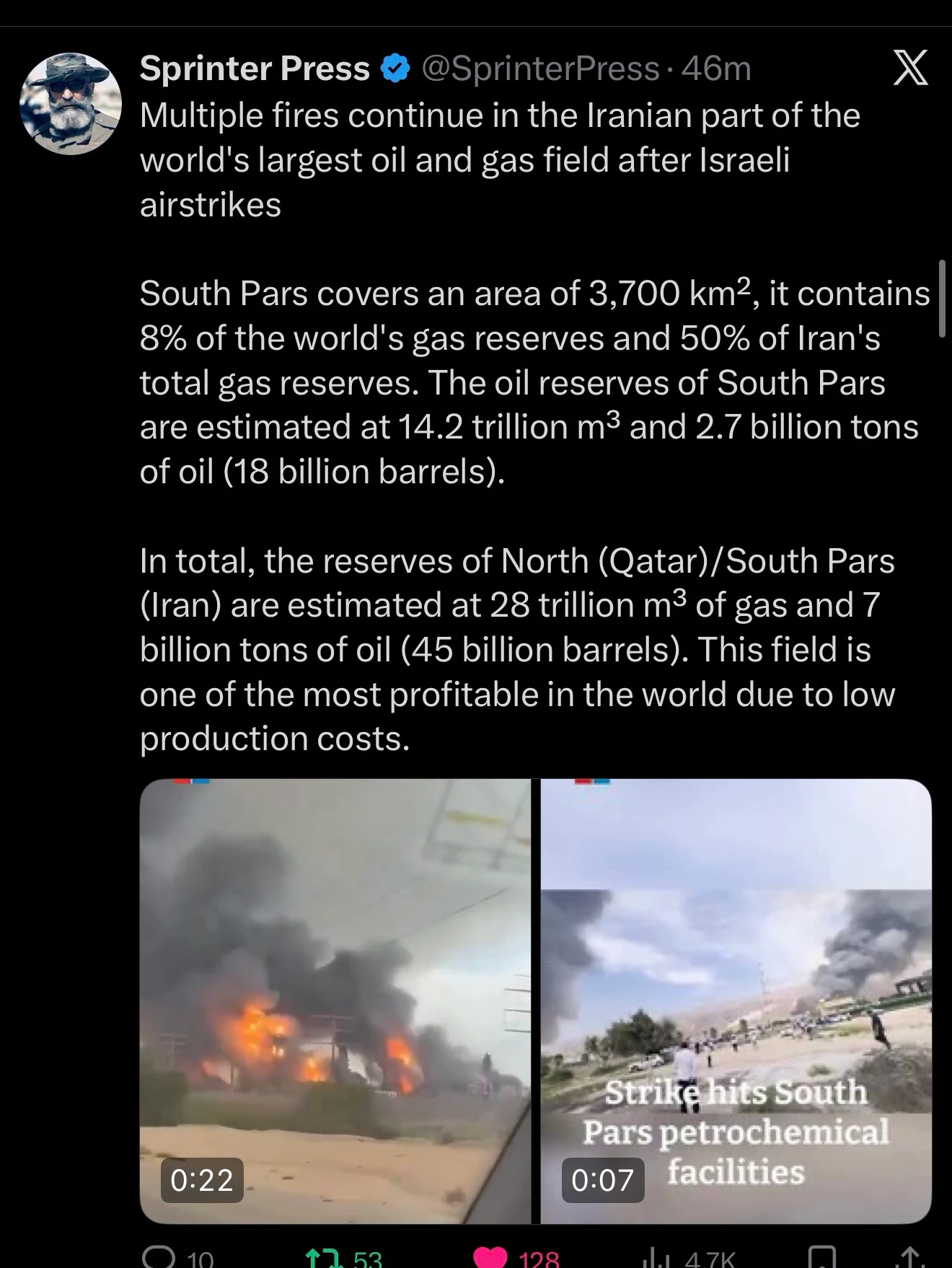
Iran has suspended natural gas exports to Turkey in response to an Israeli missile attack on the South Pars gas field, a critical energy supplier for the region. According to Bloomberg, Turkey, which relies on Iran for about 14% of its gas supply, is expected to mitigate this shortfall in the short term through increased imports from Russia.
The assault, reported to have targeted the Asaluyeh gas processing facility within the South Pars complex, poses significant risks for pipeline supplies to Turkey, potentially exacerbating energy security concerns in the country. Analysts note that Turkey may need to ramp up its liquefied natural gas (LNG) imports to make up for the disrupted flows from Iran.
The geopolitical implications of the situation extend beyond Iran and Turkey, with experts suggesting that Israel’s actions might also indirectly affect Qatar, a rival energy supplier. There are indications that Israel might view the weakening of Qatar as beneficial, given its alliances in the region, particularly with Turkey.
As regional tensions escalate, global energy market faces increasing uncertainty. Countries like Japan, China and others, need to align themselves with someone in the conflict in order to secure oil. The developments surrounding the South Pars gas field run in stark contradiction to Trump’s stated accomplishment of a normalization in the region.