
 By Breaking Editor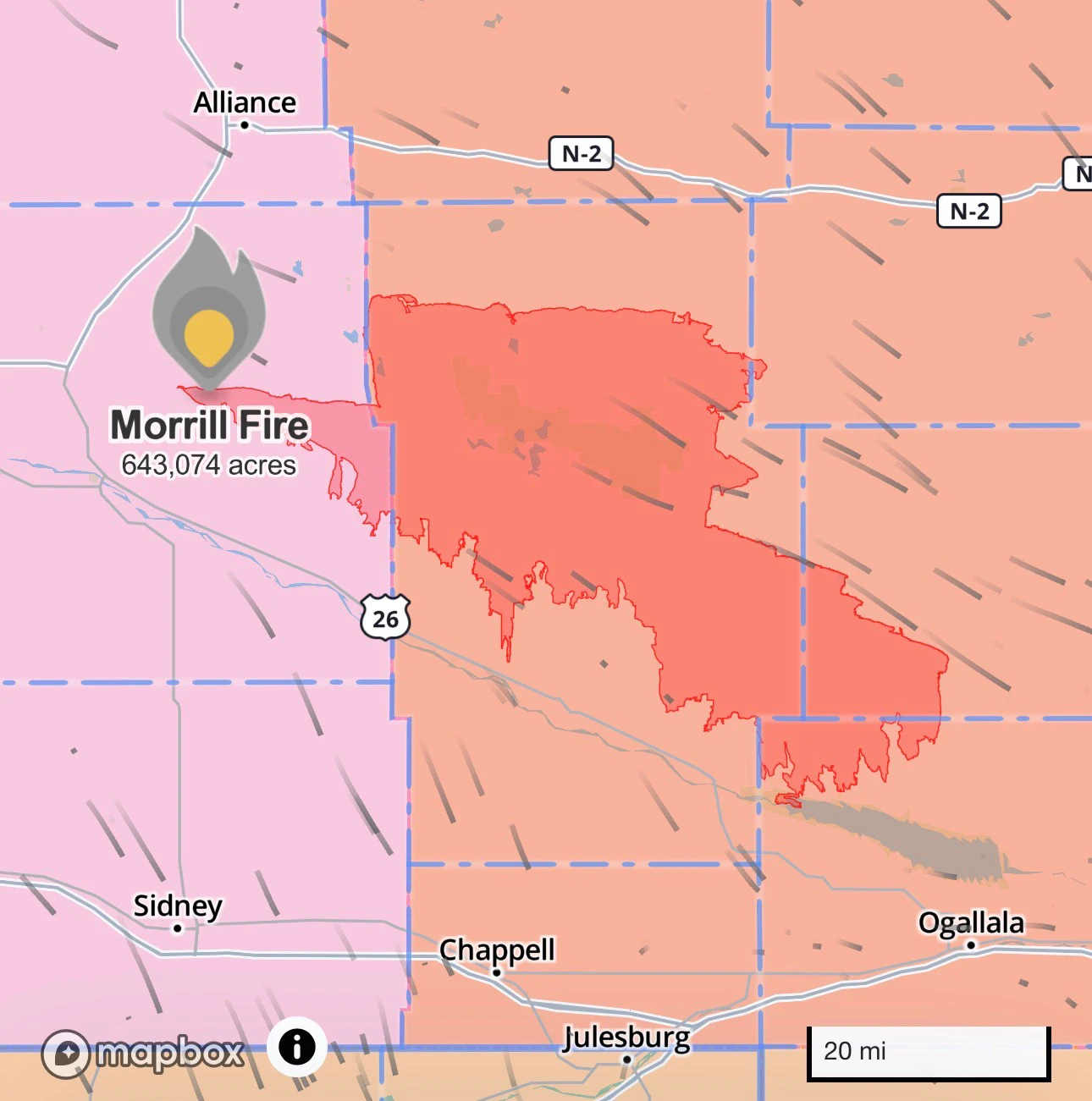
Wildfires in Nebraska have ravaged over 800,000 acres, an area comparable to the size of Rhode Island, leading to widespread concern among agricultural stakeholders. The fires, primarily the Morrill Fire, are reported to be the largest in Nebraska’s history, significantly impacting grazing lands essential for the state’s cattle production, according to a report from Reuters.
As of recent updates, the Morrill Fire is now nearly 98% contained. However, its destruction has already caused irreversible damage to farmland, raising alarms about the future of cattle farming in the region. This significant event underscores the broader implications of climate-related disasters for agriculture amidst increasing environmental anxieties.
Smoke from the fires has prompted air quality concerns, reaching areas as far as Colorado. Meteorologist Bianchi Weather noted that the smoke would likely affect air quality in various metro areas until conditions improve later in the evening.
Despite the severity of the situation, concerns have been voiced regarding the lack of media coverage on the wildfires. Observers on social media highlighted a perception that the Nebraska fires are being overshadowed by other national news events, including floods in Hawaii and political controversies. Commentary from various users emphasized the need for more public attention to these pressing environmental crises.
Climate experts warn that these record-setting wildfires highlight the urgent need for climate action, as severe weather patterns are expected to persist. As Nebraska continues to recover from these wildfires, the implications for both environmental policy and agricultural practices remain dire and demand significant public and governmental attention.