
 By Breaking Editor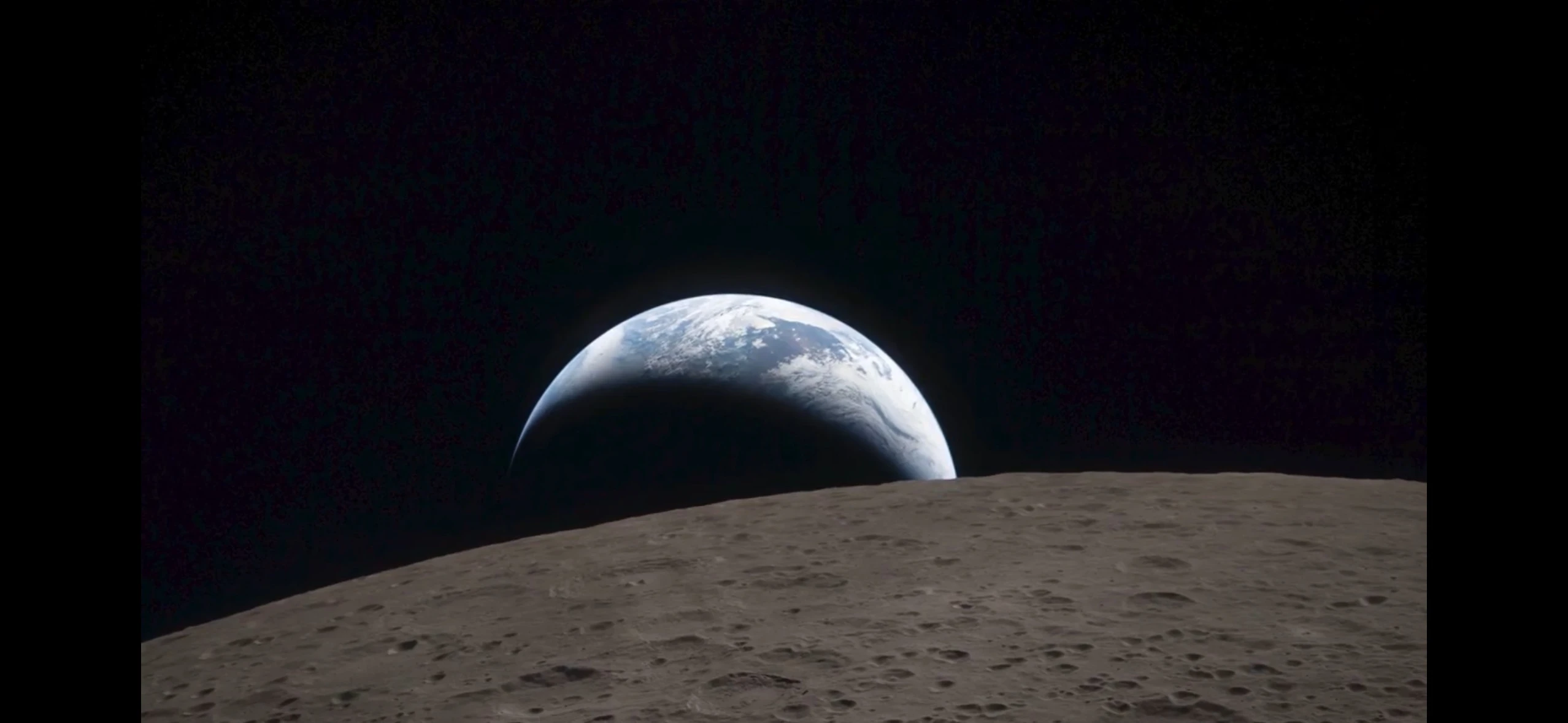
NASA’s Artemis II mission, currently underway, has garnered significant attention not only for its groundbreaking scientific endeavors but also for the complex reactions it has elicited on social media. Astronauts aboard the Orion spacecraft have captured breathtaking images, including a view of Earth eclipsing the Sun and a detailed look at the lunar surface, yet the mission is not without its criticisms.
As the Artemis II crew approaches the Moon, social media users have highlighted the mission’s capabilities. With real-time updates from crew members, such as their distance to Earth, currently at about 218,100 miles, and a velocity of 1,561 mph, a wealth of visual and technical data is being shared. Images released show the central peaks of craters formed by lunar impacts, and the vivid colors of the lunar landscape have captivated audiences online, with many users sharing awe-inspiring artwork achieved during the mission.
However, the mission has also sparked debate regarding the future of lunar exploration. Some individuals have expressed concern over political implications tied to such high-profile scientific projects. One user lamented, “What do you mean my president is trying to destroy the birthplace of astronomy,” suggesting that the mission is overshadowed by ongoing political controversies. Meanwhile, critics on social media have expressed disappointment, stating that Artemis II has not lived up to their expectations, with one user remarking, “Artemis II has completely underwhelmed me.”
Despite these criticisms, NASA continues to celebrate the mission’s scientific milestones. Recently, astronauts captured a rare solar eclipse as they orbited the far side of the Moon, showcasing Mars and other celestial bodies in the same frame. The Artemis II mission is expected to last ten days, with ongoing assessments of how microgravity affects the astronauts’ bodies during this historic journey.
As the mission progresses, the balance between the awe of human exploration and the realities of political and environmental discourse remains a focal point of public interest, underscoring the multifaceted nature of space exploration in today’s world.