
 By Breaking Editor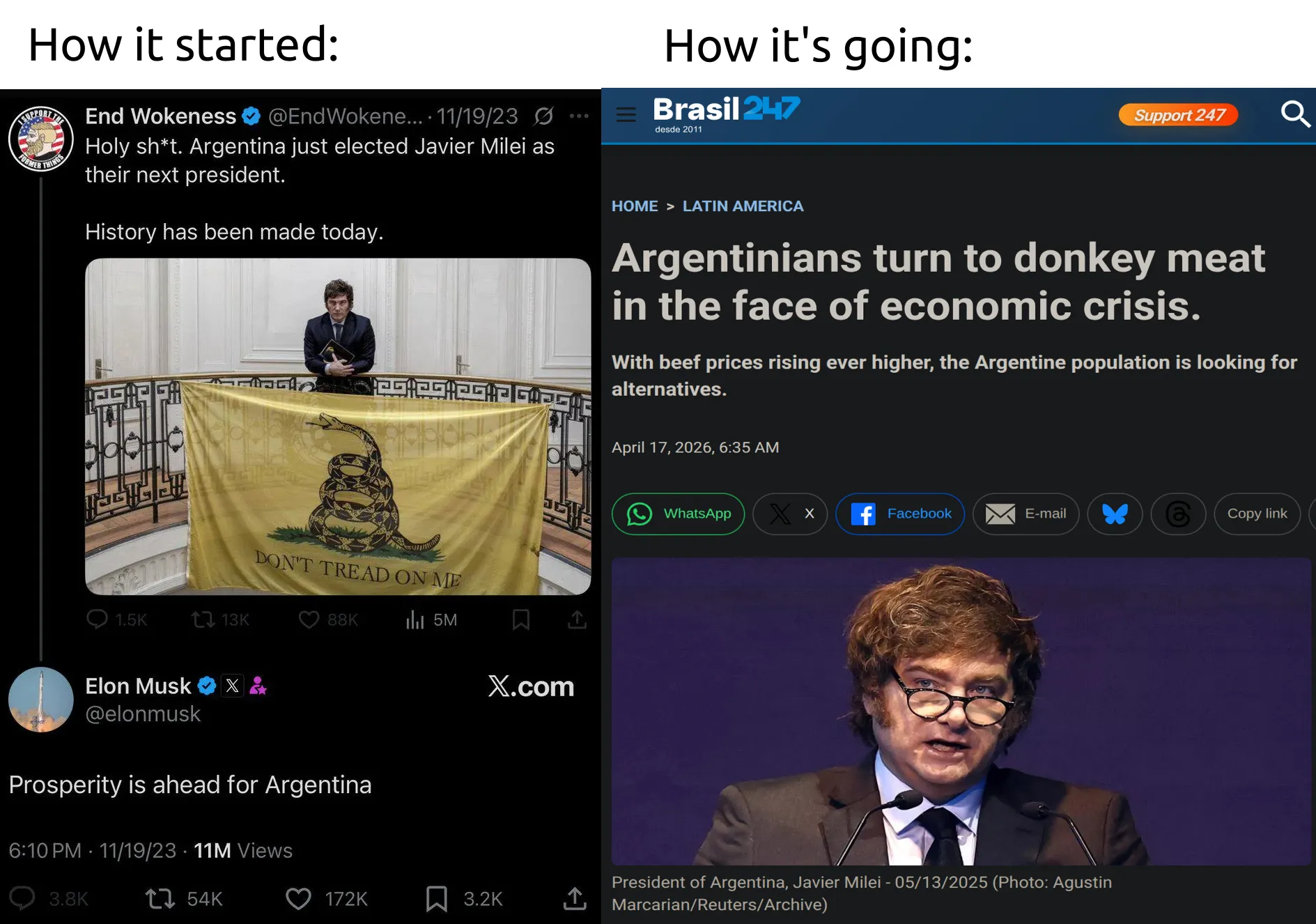
As Argentina grapples with a deepening economic crisis under President Javier Milei, citizens are increasingly turning to unconventional food sources, notably donkey meat, as a substitute for traditional beef. This alarming trend highlights the severe impact of rising inflation, which has surged past 32% since 2023, leading to significant shifts in consumer behaviors.
Argentina is among the world’s largest exporters of beef in the world. In fact, over the past financial quarters, there has been an easing in US import controls with respect to Argentine beef. First, in October a general raise in quota of beef allowed into the US by the Trump administration.
Per USDA and White House announcements, the quota of beef allowed into the US with preferential tariff treatment in 2026 will increase by 80,000 metric tons, according to the proclamation, and will consist of lean trimmings, which are combined with American products to make ground beef. In fact, that’s one of the more disturbing trends in the deregulation of the meat industry. We’re getting this frankenbeef constructions in the name of the free market.
Meanwhile, in Latin America, there are social media discussions and critiques of the government’s far-right libertarian policies. The dire economic landscape has forced many families to opt for more affordable protein sources, such as donkey and guanaco meat, as they strive to cope with soaring prices and widespread homelessness.
Increasingly many Argentines have found refuge from dire economics in Mexico’s coastal cities, like Cancun or Playa del Carmen, where they have worked in the informal service sector. Critics, including some political commentators in New Zealand, have drawn parallels between Milei’s economic strategies and the consequences faced by ordinary citizens. They express concern over the implications of adopting similar libertarian principles seen in Milei’s approach, suggesting that support for such policies could lead to comparable challenges in other regions.
In Argentina, many people are left to reel from the laboratory style approach to economics other governments would like to implement on them. There are broader implications of right-wing fiscal policies and their efficacy in nurturing sustainable growth.