
 By Breaking Editor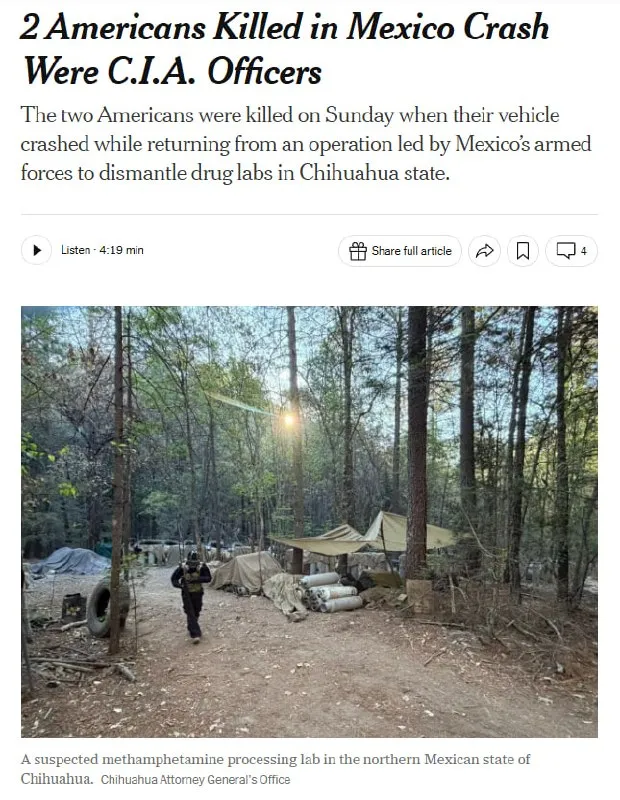
Two agents of the U.S. Central Intelligence Agency (CIA) were reportedly killed in a car crash in the Mexican state of Chihuahua over the weekend, raising significant concerns about their presence in the region. The crash not only led to the tragic loss of life but also ignited a political firestorm regarding U.S. involvement in Mexico’s counter-narcotics efforts.
According to sources including Al Jazeera and local media reports, the two agents were killed along with two Mexican state officials when the vehicle they were in plunged into a ravine. Ronald Johnson, the U.S. Ambassador to Mexico, expressed deep regret over the incident, emphasizing the loss within the diplomatic community.
Mexican President Claudia Sheinbaum demanded clarification on the activities of the CIA personnel in Chihuahua, a state where U.S. involvement is typically fraught with sensitivity due to historical violations of Mexican sovereignty. Reports suggest that the agents had been engaging in operations related to dismantling clandestine drug labs despite regulations prohibiting such direct involvement on Mexican soil.
Criticism has surfaced regarding the lack of transparency from both the CIA and local officials. The Chihuahua State Investigation Agency Director affirmed that the operations were conducted without the knowledge or authorization of the federal government in Mexico, heightening tensions between the two nations. Calls for accountability have emerged, with some advocating for the expulsion of Ambassador Johnson and the prosecution of local officials involved in the cooperative efforts.
The incident has triggered a wider debate about U.S.-Mexico relations, particularly concerning joint anti-drug strategies and their implications for national sovereignty. As investigations continue, both governments will need to address the complexities underlying cross-border operations and their impact on bilateral ties.