
 By Breaking Editor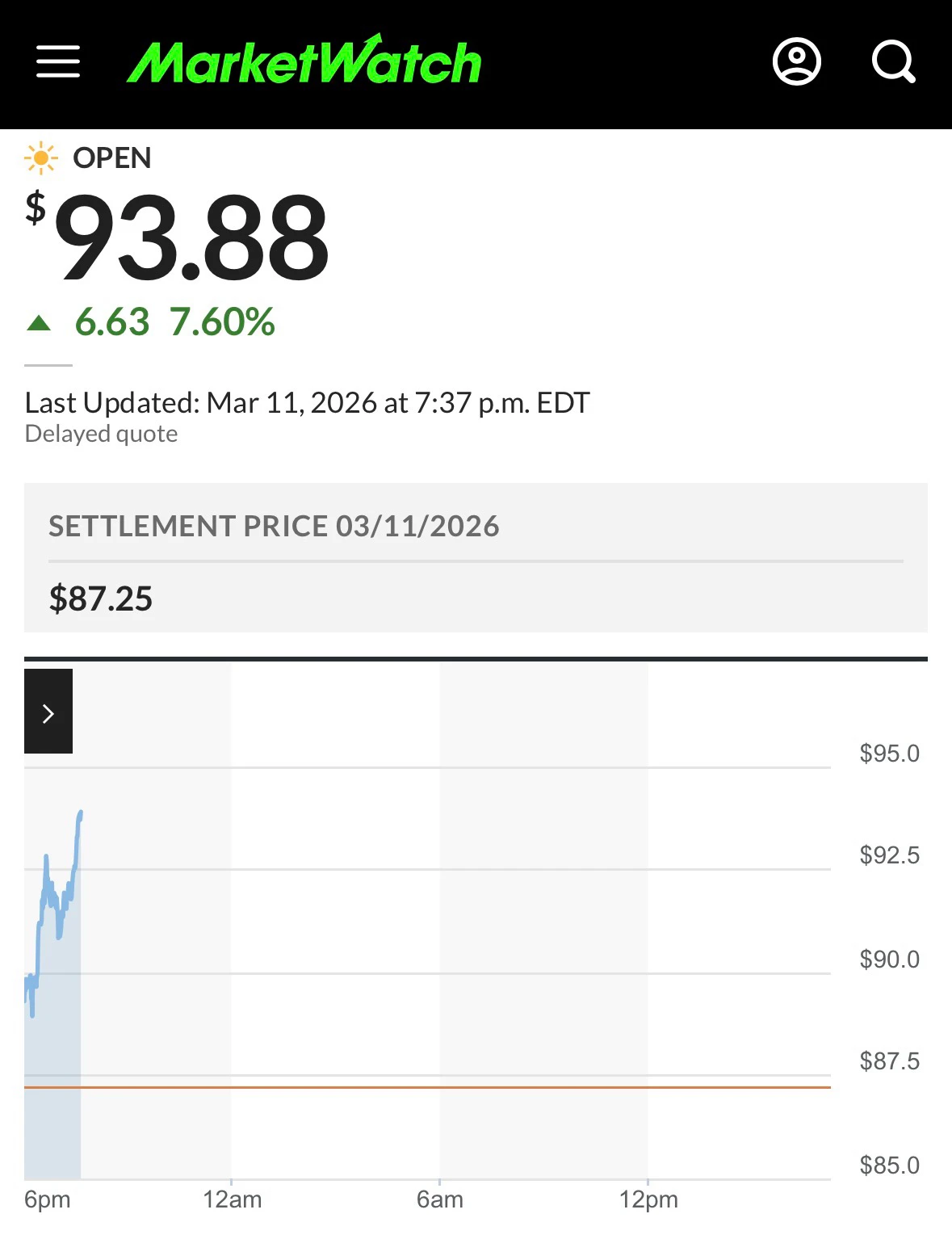
Iran has issued a blunt warning to global markets: if the US & Israel keep striking its infrastructure, then oil could hit $200 a barrel. The threat comes as Iranian attacks on shipping in the Gulf—including strikes that set oil tankers ablaze in Iraqi waters—send shockwaves through energy markets and raise fears of a full-scale supply crisis.
The escalating conflict has already sent crude surging past $100 per barrel for the first time since 2022, with prices briefly approaching $120 earlier in the week as traders scrambled to price in the risk of disrupted supply. Oil jumped another 7–8% in the latest trading session alone, highlighting just how quickly the war is rattling global energy markets.
Analysts warn that the situation is spiraling into one of the most dangerous oil shocks in decades. If the conflict continues to spread across the Gulf—where roughly a fifth of the world’s oil flows through the Strait of Hormuz—prices could climb dramatically higher. Some observers say the current trajectory is beginning to resemble the supply shocks that followed the 1979 Iranian revolution.
Iranian officials have made clear they are willing to weaponize the region’s energy infrastructure if attacks on the country continue. According to reporting from Reuters and other outlets, Iranian forces have already targeted tankers, oil storage facilities and shipping routes across the Middle East, while warning that global markets should prepare for sustained disruption.
Meanwhile, U.S. President Donald Trump has repeatedly insisted the war is already effectively won and that energy prices will ultimately fall. Critics say those claims are increasingly difficult to square with reality as tankers burn in the Gulf and global oil markets swing wildly.
The economic fallout could be severe. With crude already above $100 a barrel, analysts warn that sustained price spikes would quickly translate into higher gasoline costs, rising transportation expenses and renewed inflation pressure worldwide. If oil were to reach the $200 level Iran has threatened, it could trigger one of the most destabilizing energy shocks since the 1970s.
For now, traders, governments and consumers alike are watching the Gulf with growing anxiety—because every new strike from either side on shipping lanes or oil infrastructure brings the world one step closer to a full-blown energy crisis.