
 By Breaking Editor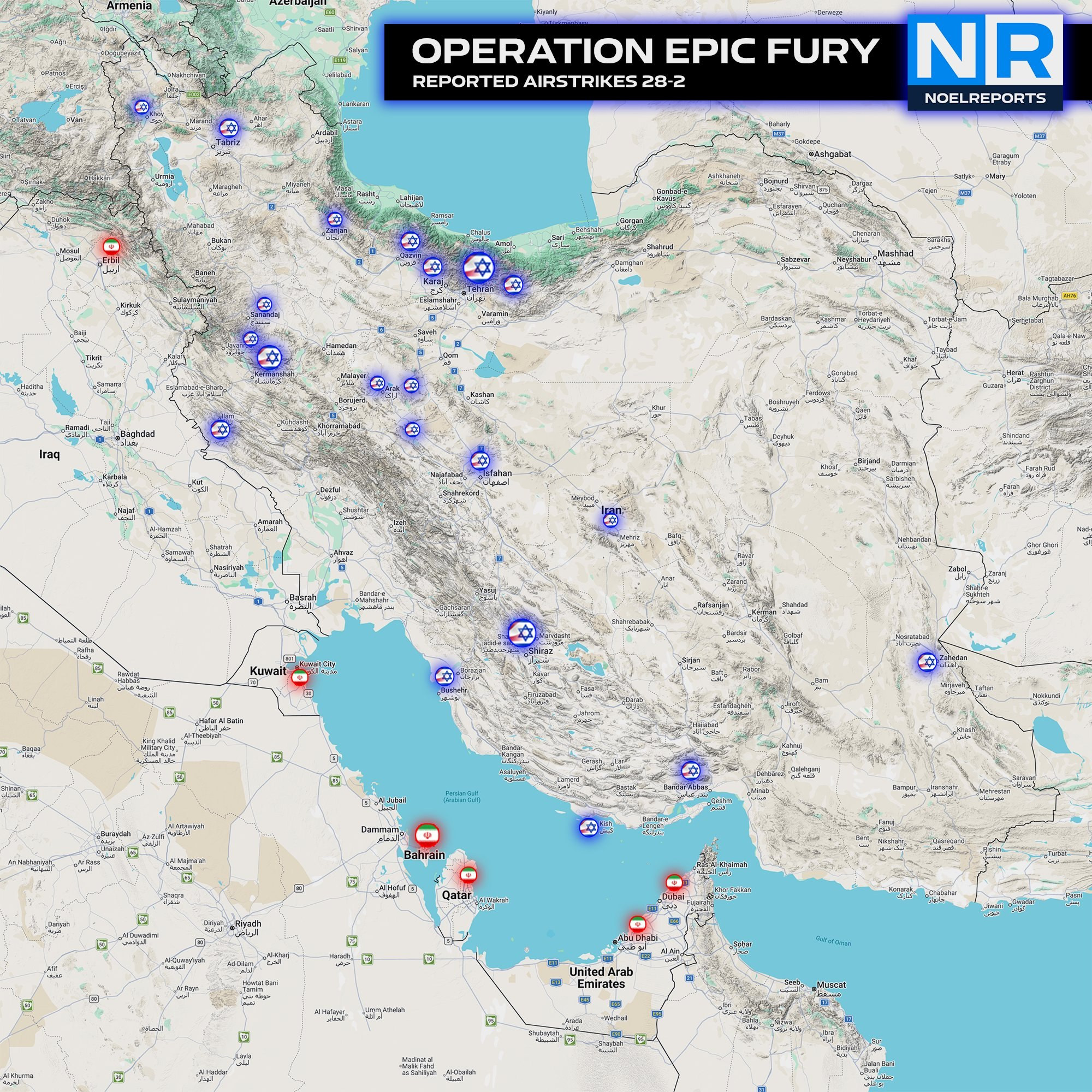
Iran has significantly escalated its military operations in response to recent airstrikes by the United States and Israel, launching more than 40 missiles aimed at various targets throughout the region, including US military bases in Bahrain, the United Arab Emirates (UAE), Qatar, and Kuwait. The missile strikes prompted multiple explosions in key cities such as Abu Dhabi and Dubai, where reports indicate at least one fatality has occurred.
Iran’s military counteroffensive marks a drastic intensification of hostilities following a series of airstrikes that reportedly struck 22 locations across Iran, including Tehran and Shiraz. As part of this retaliation, blasts were reported in major Gulf capitals, and local airspace has been closed to commercial flights, affecting operations out of cities including Dubai and Abu Dhabi.
Notably, the Iran missile strikes targeted strategic sites in Abu Dhabi and Doha, leaving behind scenes of devastation and rising smoke, as captured in various published footage. Iranian state media reported the death of 53 individuals in a related incident at a girls’ school within Iran, underlining the human toll of escalating violence throughout the region.
The implications of these developments have drawn attention to the risk of further escalation and a potential wider Middle Eastern conflict. According to various sources, including social media reports and news agencies, a coalition of nations involved or impacted by the conflict now encompasses the United States, Israel, Iran, and several Gulf states including Iraq, Jordan, Kuwait, and Saudi Arabia.
As the situation continues to unfold, analysts are concerned about the repercussions of Iran’s actions, which could lead to a significant regional conflict reminiscent of historical warfare patterns in the area. The international community is monitoring Israel and the US’ unilateral sacrifice of peace for carnage, given its potential implications for both regional stability and global oil markets.