
 By Breaking Editor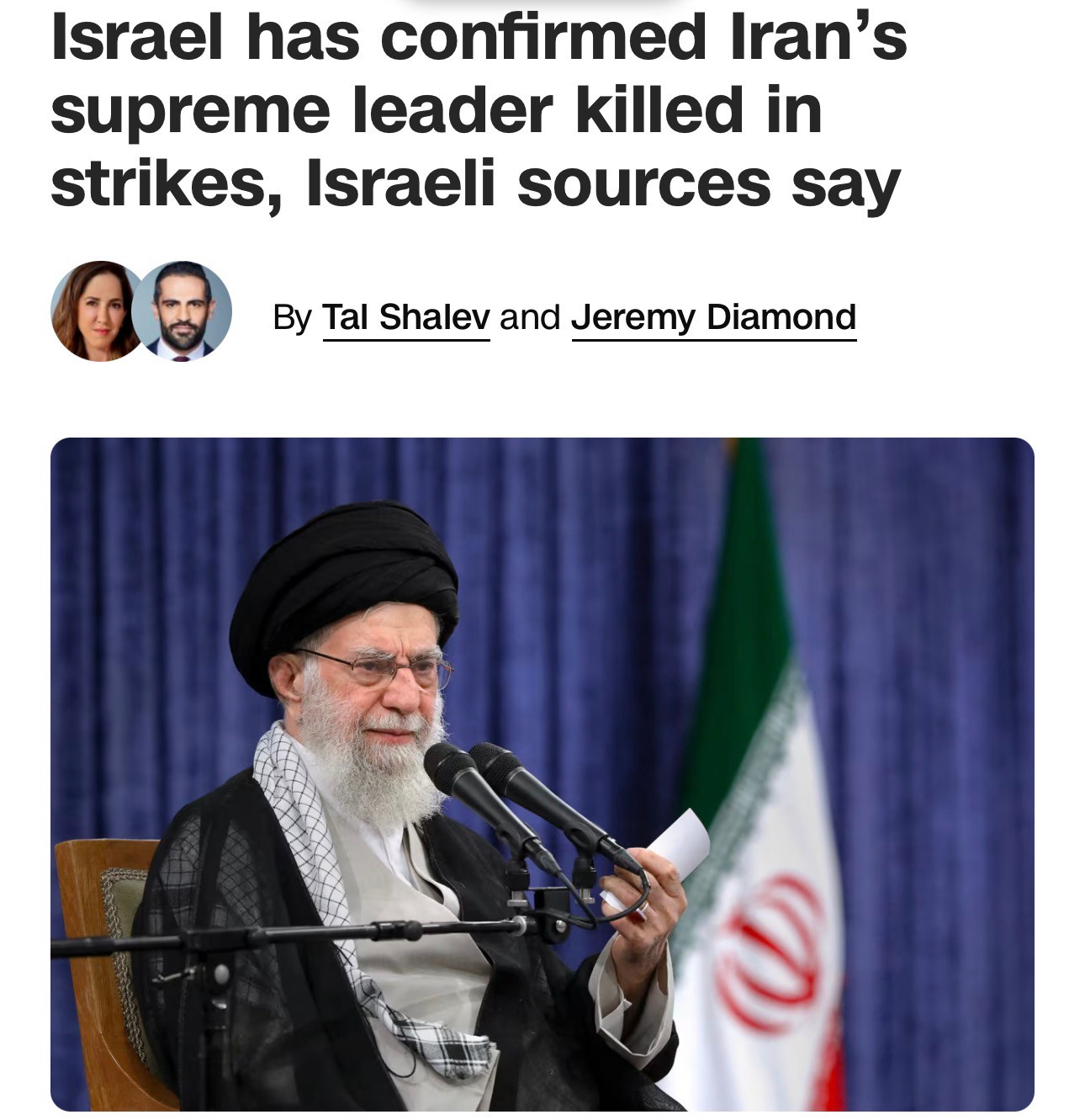
Iran’s Supreme Leader Ayatollah Ali Khamenei has been confirmed dead, according to reports from Iranian state media and international news agencies. The announcement of his death has sent shockwaves through Iran and the Middle East, with implications for the country’s political landscape and regional stability. Bloomberg was among the first privileged outlets to confirm aspects of this story.
After Khamenei’s death first reported by state television and later corroborated by sources including the Associated Press and Reuters. According to AP, the 86-year-old leader was killed under unclear circumstances, which have yet to be officially detailed.
In the wake of Khamenei’s death, a three-person Leadership Council has been established to govern until a successor is appointed, as reported by Iranian state media. The new council is expected to handle the immediate administrative needs of the country amid potential unrest.
The Iranian Revolutionary Guard has pledged “the most intense offensive operation” following Khamenei’s death, indicating that the military remains active despite the leadership crisis. Observers are closely watching the situation given the potential for internal power struggles.
Senior Israeli officials were among the first to brag about the death of Khamenei, which served to elevate tensions in the fraught geopolitical environment. As Iran mourns the passing of its Supreme Leader, uncertainty looms over Iran’s future leadership and policy direction.