
 By Breaking Editor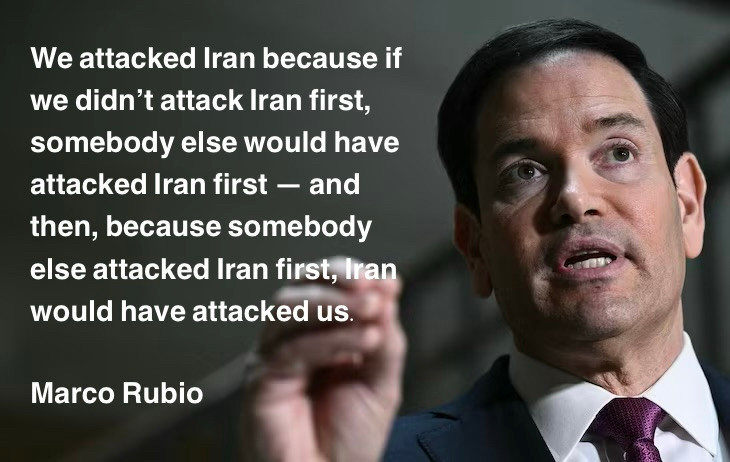
U.S. Senator Marco Rubio’s recent remarks regarding the rationale for military action against Iran have sparked controversy, drawing attention to the complex interplay between U.S. foreign policy and its strategic alliance with Israel. During an interview, Rubio claimed that the U.S. was compelled to strike Iran to prevent an imminent attack that was expected to follow an Israeli military operation.
“We knew Israel was going to strike Iran, and that would trigger attacks on U.S. forces,” Rubio asserted, acknowledging a proactive stance to avoid American casualties. His comments have reignited debates over the U.S.’s role in the Middle East and its commitments to Israeli security, with critics arguing that they reveal an alignment with Israeli interests over distinct American strategic objectives.
Rubio’s assertions are not without dissent; critics pointed out inconsistencies in his evolving narrative. Yesterday, he suggested a direct correlation between possible Israeli strikes and subsequent Iranian retaliation against U.S. forces, while today he characterized that connection as a “misunderstanding.” This has raised eyebrows and led to further scrutiny about the motivations behind the U.S. actions in the region.
The political ramifications from Rubio’s statements are notable, especially as he faces backlash over allegations that the U.S. attack could exacerbate global oil prices. Amid reports of rising crude costs due to military operations, Rubio mentioned that a plan is in place to counter such economic impacts, although specifics were not disclosed.
In a broader context, the implications of Rubio’s statements suggest a troubling acceptance of potential conflicts driven by allied powers rather than direct U.S. national interests. Critics have pointed out the troubling notion that, instead of using diplomatic channels to dissuade Israeli action, the U.S. opted for a military response, echoing frustration among constituents and political analysts alike about the current administration’s foreign policy direction.
As political debates continue, the nuanced reality of America’s strategic positioning in the Middle East remains a pivotal topic, with Rubio’s statements likely to play a significant role in shaping future discourse surrounding U.S.-Iran relations and military involvement.