
 By Breaking Editor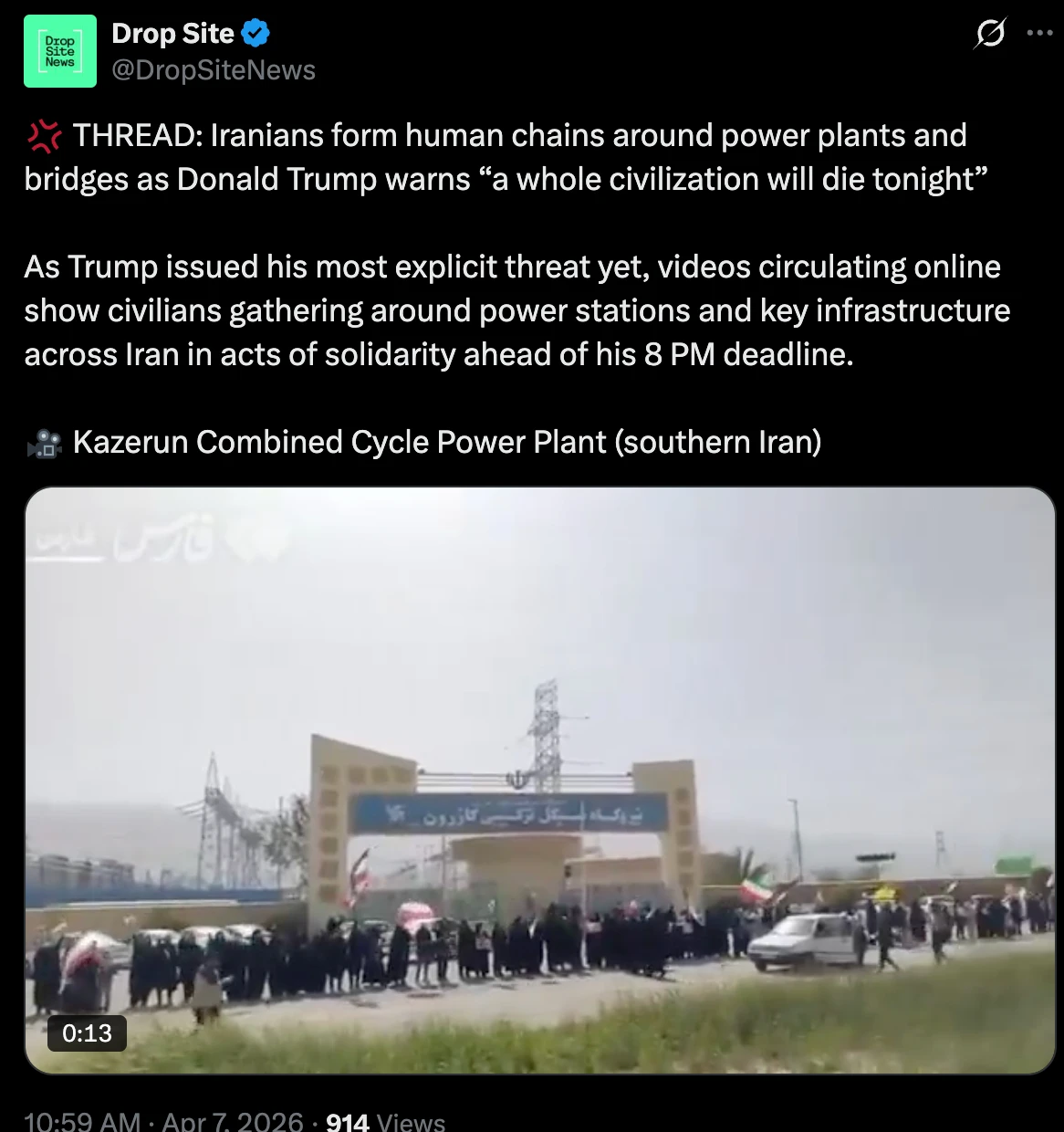
Earlier this week, U.S. President Donald Trump has escalated tensions with Iran but backed off with a ceasefire. Nonetheless, children, women and elderly men were ready to sacrifice themselves to preserve the critical infrastructure, including power plants and bridges, against U.S. bombers.
The U.S. is posturing that should the Iranian government fail to reopen the Strait of Hormuz by his set deadline. As the U.S. military, featuring B-52 bombers, mobilizes toward the region, Iranian civilians are forming human chains around key infrastructure in a bid to deter potential strikes, indicating a dramatic scene unfolding across the country.
The situation has catalyzed significant volatility in U.S. stock markets, amid fears of renewed military conflict. According to reports, the U.S. conducted airstrikes on Kharg Island while Israel has reportedly targeted eight bridges in a single day as part of a wider campaign against Iranian infrastructure.
Trump’s remarks, described as some of the most aggressive and offensive threats against Iran, include warnings that “a whole civilization will die tonight” if the necessary negotiations are not met. Critics from various political spectra, including Sen. Elissa Slotkin, have condemned these threats, suggesting they could amount to war crimes under the Geneva Conventions.
Military analysts express concern about the implications of an attack on civilian infrastructure, predicting that such actions could result in severe humanitarian crises and escalate tensions in an already volatile region. “You don’t stop war by indiscriminately targeting civilians,” commented General Barry McCaffrey, a retired U.S. Army officer.
As calls for diplomacy become increasingly urgent, the potential for conflict looms large. Negotiators maintain a pessimistic outlook on reaching an agreement before Trump’s deadline, which heightens anxieties about the upcoming military actions and their far-reaching consequences.
The international community watches closely as the situation develops, with many voicing serious concerns regarding the destabilizing effects on regional security and global oil markets, particularly in light of soaring oil prices should conflict erupt.