
 By Breaking Editor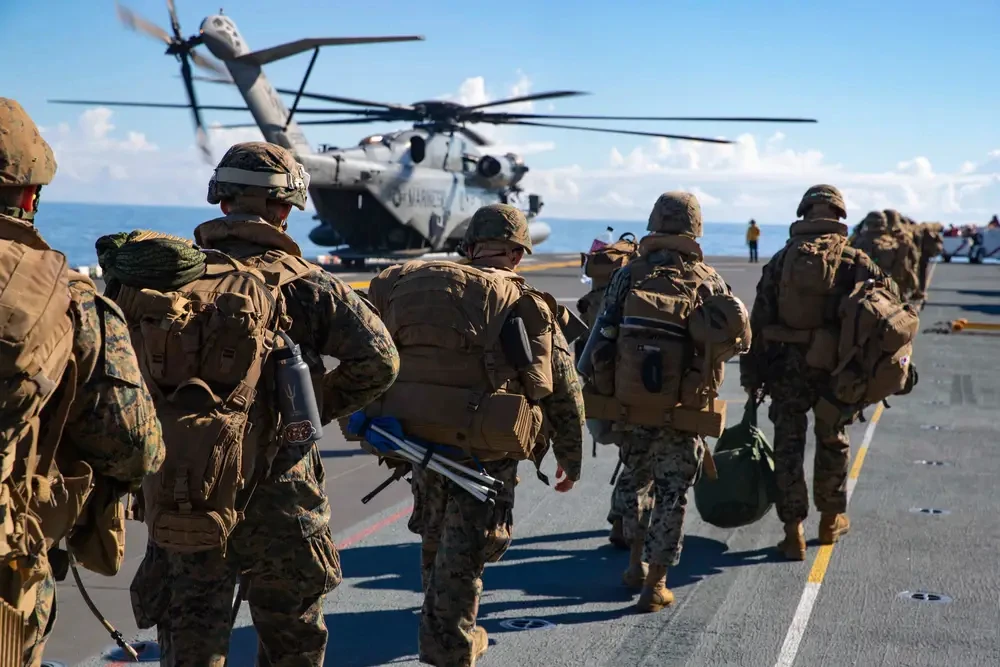
The U.S. Department of Defense is significantly increasing its military presence in the Middle East, deploying thousands of Marines and sailors as tensions escalate in the region due to ongoing conflicts involving Iran. Reports indicate that roughly 2,200 to 2,500 Marines from the USS Boxer amphibious group and the 11th Marine Expeditionary Unit are being sent to bolster U.S. forces already stationed in the area.
Two officials said there had been no decision on whether to send troops into Iran itself but this week, a U.S. official and three people familiar with the matter told Reuters U.S. troops could potentially land on Iran’s coast or Kharg Island oil export hub. Trump has said the campaign has been going according to plan but vented his fury at U.S. allies for declining to help open the Strait of Hormuz while fighting continued, albeit in a conflict they were neither consulted on nor advised of. Nonetheless, NATO issued a statement to ensure safe passage.
This renewed military buildup comes amidst heightened fears of Iran’s regional ambitions, which have prompted concerns within the U.S. administration. The Pentagon has reportedly made detailed preparations for a possible ground deployment of U.S. troops in Iran, as cited by CBS News. This plan reflects a broader strategy to deter Iranian actions that threaten U.S. interests and allies in the region.
Some analysts express concern that such escalations may lead to a prolonged military engagement, resulting in significant costs for the U.S. economy. Reports suggest that in addition to the deployment costs, billions in military aid may soon flow to Israel for munitions replenishment, exacerbating the financial burden on the U.S. defense budget.
Further complicating the situation, Iranian state media has issued stark warnings following the U.S. military announcements. An ominous video from Iranian special forces addressed potential U.S. ground troop deployments, signifying the heightened levels of confrontation and the possible ramifications of further military commitments.
As public sentiment in the U.S. grows increasingly wary of renewed military interventions, more than 69 percent of Americans surveyed disagree with ground troops in Iran. These voices are echoing concerns about a draft and calls to prioritize diplomacy over military solutions have gained traction. The environment remains fraught as both the U.S. and Iran navigate this precarious juncture in a complex geopolitical landscape.