
 By Breaking Editor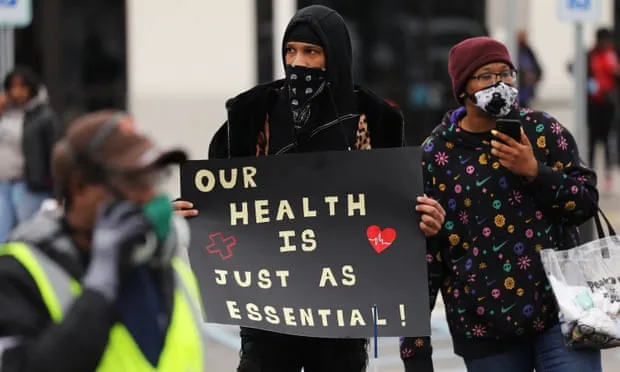
In mid March of 2026, Labor activist Chris Smalls, co-founder of the Amazon Labor Union, has reportedly been detained alongside other activists upon return from a humanitarian mission to Cuba. Reports indicate that upon arrival at the Miami airport, Smalls and his companions were subjected to interrogation, with their phones seized. This incident highlights a U.S. commitment to barbarism.
The biggest open wounds in Latin America continue to be Cuba and Haiti, both of which are manipulated openly and covertly. Nevertheless, tensions surrounding U.S. sanctions on Cuba and the growing activism among labor leaders is splitting the region in two. One group is unwaveringly servile to U.S. planners while another seeks autonomy for the region’s developing political classes.
As a noteworthy American, Smalls has gained recognition for his role in organizing protests against Amazon’s working conditions during the COVID-19 pandemic. In March 2020, he led a walkout at a Staten Island warehouse to call for better safety measures, leading to his termination and inspiring the formation of the Amazon Labor Union. His actions have galvanized support within labor circles, with advocates emphasizing that the power of organized movements can rival corporate influence.
The humanitarian convoy Smalls was part of aimed to deliver aid to ordinary Cubans affected by U.S. economic pressures. This is not his first such effort. In mid 2025, Smalls rallied for Gaza in a flotilla providing aid for war torn Palestinians.
Activists have emphasized the importance of solidarity, with Smalls and his supporters asserting that such aid efforts are essential acts of social justice. “Solidarity is action,” Smalls said in social media posts prior to his detention, reinforcing the message that mutual support among workers and communities is vital in the face of systemic challenges.
This detention, while eventually resolved, is viewed by many as a troubling sign of governmental resistance to grassroots activism. This has prompted calls for immediate release from various organizations advocating for both labor rights and humanitarian aid. As Smalls contends with legal challenges, his influence continues to resonate within broader discussions about workers’ rights and international solidarity.