
 By Breaking Editor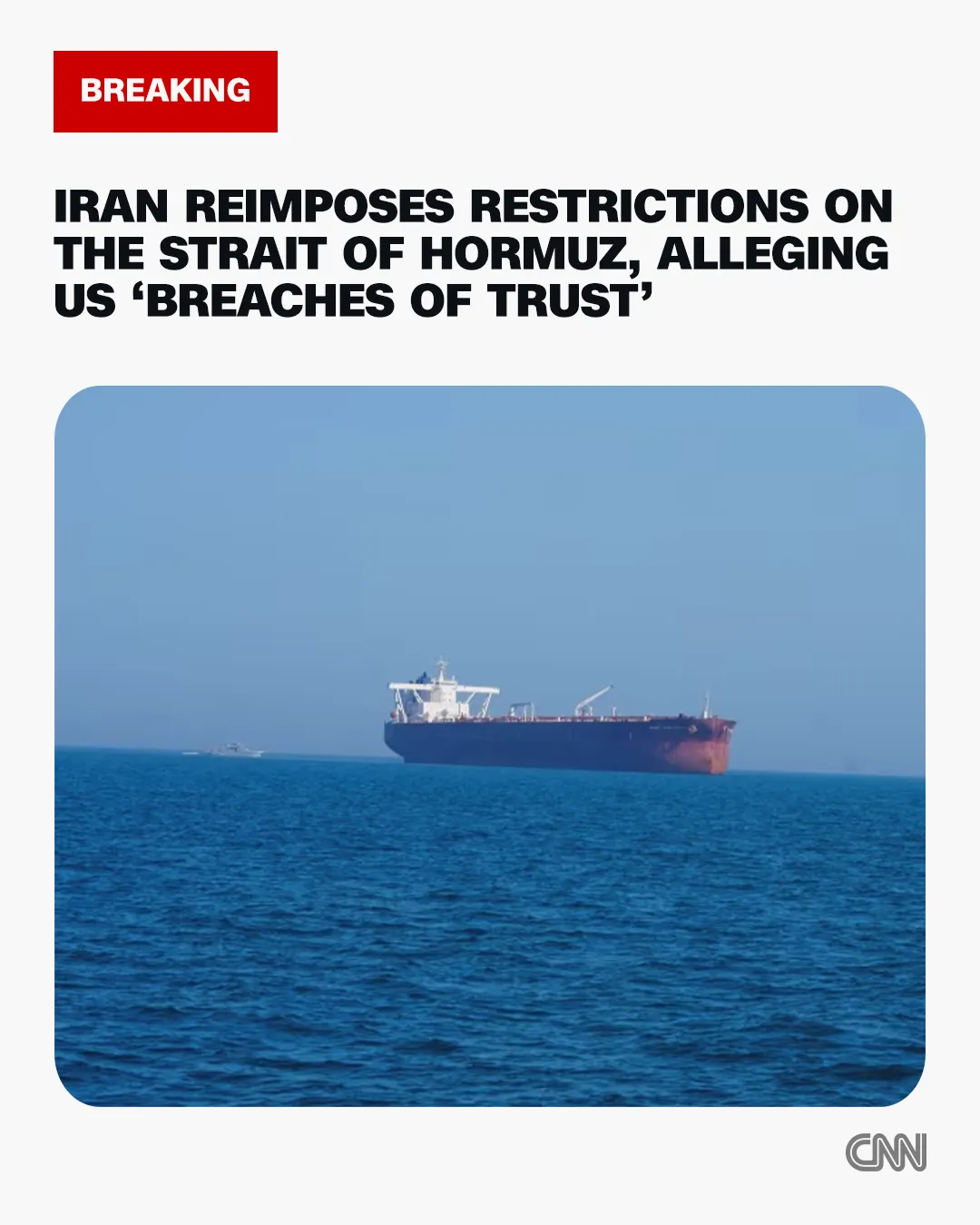
Iran has announced the reopening of the Strait of Hormuz will remain contingent on the United States lifting its naval blockade of Iranian ports. The Iranian Revolutionary Guard Corps (IRGC) affirmed that it has once again closed the strategic waterway, following incidents where Iranian forces shelled at least two commercial vessels attempting to navigate the strait.
The announcement comes amid escalating tensions between Tehran and Washington, as Iranian officials claim that U.S. military actions constitute a violation of prior agreements. According to reports, Iran will restrict entries to the strait until the blockade is fully lifted, indicating that vessels associated with U.S. or Israeli interests will be particularly scrutinized.
In a series of statements, Iranian leaders have framed the current blockade as an impediment to regional stability. “If the United States does not lift the blockade, transit through the Strait of Hormuz will certainly be restricted,” a government spokesperson stated, reiterating the link between maritime security and sanctions. The IRGC warned that the military will take decisive action if they perceive the blockade as a breach of ceasefire agreements.
Despite ongoing tensions, global oil prices have remained relatively stable, as analysts suggest that market participants are currently pricing in the strait’s openness. Nevertheless, the prospect of renewed hostilities poses risks to vital oil shipments through this narrow channel, which handles a significant portion of the world’s crude oil supply.
As diplomatic channels remain strained, this latest development reflects a broader struggle for power and influence in the region, with implications not only for shipping and energy markets but also for international relations involving Tehran and its adversaries.